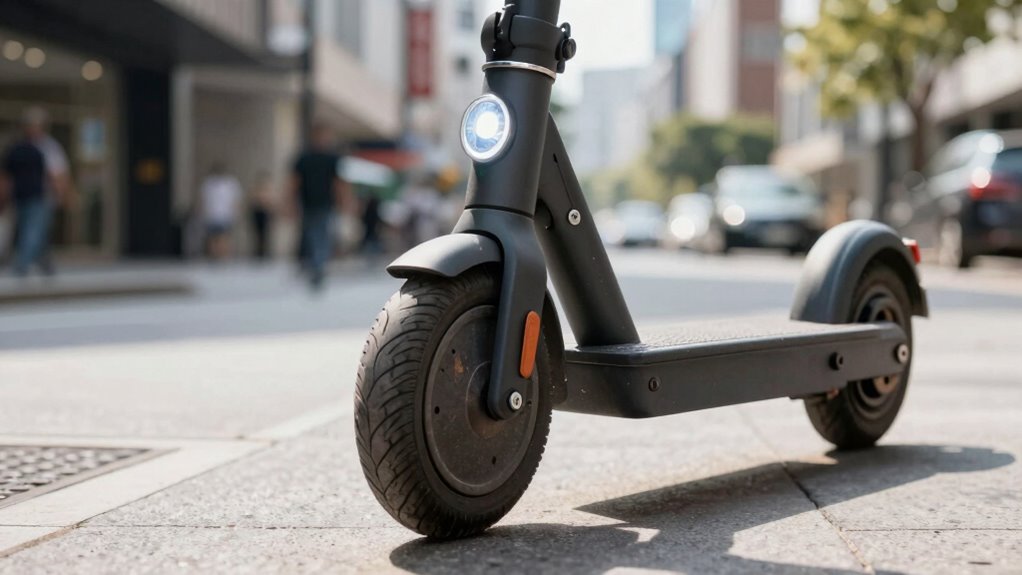

Before riding your e-scooter, do a quick safety check. Make sure your brakes respond promptly, and tires are properly inflated, free of cracks or debris. Test front and rear lights to make sure visibility, especially in low-light conditions. Verify all safety features work correctly, and your helmet fits snugly. Staying vigilant and maintaining your scooter can prevent accidents. Keep these tips in mind, and discover more essential safety practices to stay safe on every ride.
Key Takeaways
- Regularly test brakes for prompt response and ensure they are free of damage or wear.
- Check tire pressure, tread, and for embedded debris to maintain optimal grip and stability.
- Verify front and rear lights function properly to increase visibility in low-light conditions.
- Ensure helmet fits securely, covers the forehead, and is properly secured for maximum safety.
- Follow traffic laws, stay alert, and inspect safety features before each ride to prevent accidents.
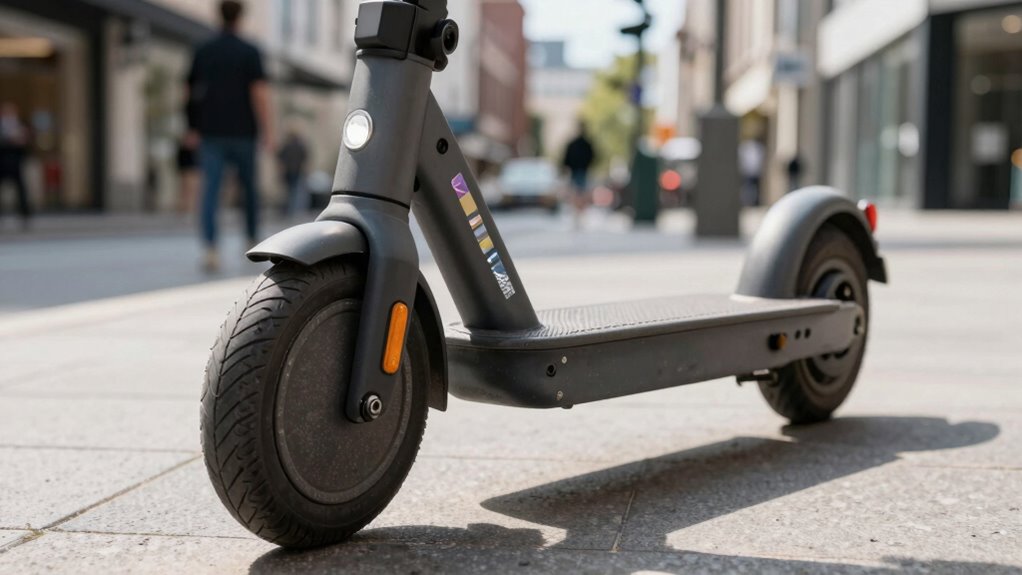
Riding an e-scooter can be a fun and efficient way to get around, but safety should always come first. Before you hop on, take a moment to check your helmet fit. A helmet that’s too loose won’t provide adequate protection if you fall, and one that’s too tight can be uncomfortable and distract you during your ride. Ensure your helmet sits snugly on your head with minimal movement, covering your forehead and fitting comfortably around your chin strap. Proper helmet fit isn’t just about comfort; it’s about safety. Always double-check that your helmet is secure before each ride.
Another vital aspect is battery maintenance. An e-scooter’s battery is the heart of its performance, so keeping it in good shape is essential for safe riding. Regularly inspect the battery for any signs of damage, such as cracks or corrosion, and make certain the connections are secure. Fully charge the battery before each ride, but avoid leaving it plugged in for extended periods once fully charged, as overcharging can reduce its lifespan. If your scooter has a removable battery, store it in a cool, dry place when not in use for prolonged periods. Proper battery maintenance not only prolongs the lifespan of your scooter but also prevents unexpected shutdowns that could lead to accidents.
The condition of your tires also plays a significant role in safe riding. Check for proper inflation—under-inflated tires can affect balance and handling, while over-inflated tires may reduce grip. Look for any signs of wear, cracks, or embedded debris that could compromise your ride. Maintaining well-inflated, damage-free tires ensures better traction and stability, especially when steering through uneven surfaces or sudden turns.
Lights are another vital safety feature. Make sure your scooter’s front and rear lights are functioning correctly before every ride. Proper lighting increases your visibility to others, especially at night or in low-light conditions. Test your indicators and brake lights to confirm they’re working, and replace batteries or bulbs if needed. Bright, functioning lights can alert pedestrians and vehicles to your presence, reducing the risk of collisions.
Finally, stay aware of the reality of riding an e-scooter. Always follow local traffic laws, be alert to your surroundings, and ride within your skill level. Modern technology offers innovative safety features that can enhance your riding experience, but it’s crucial to stay vigilant. Check your brakes regularly to ensure they respond promptly and smoothly. Combining these safety checks with good riding habits will help you enjoy your trips while minimizing risks. Remember, safety isn’t just about equipment; it’s about being vigilant and prepared every time you ride.

BAGAIL 8 Set Packing Cubes Luggage Packing Organizers for Travel Accessories-Cream
- Premium Durable Fabric: Resists wrinkles, stains, and wear
- Water-Repellent Material: Protects clothes from spills and leaks
- Lightweight Design: Easy to pack without adding weight
As an affiliate, we earn on qualifying purchases.
Frequently Asked Questions
How Often Should I Replace My E-Scooter’s Brake Pads?
You should replace your e-scooter’s brake pads every 6 to 12 months, depending on your brake pad lifespan and usage. Keep an eye on signs like reduced braking performance or squealing sounds, which indicate it’s time for replacement. Regular checks help guarantee safety and peak performance. Remember, frequent riding or rough terrain can shorten the replacement frequency, so stay attentive to your brake pad condition.
What Type of Tires Are Best for Different Weather Conditions?
Imagine your tires as the soles of your shoes, gripping the road through varying weather. For rain or snow, opt for tires with deep tread and strong grip, ensuring good traction. In dry conditions, smoother tires with less tread work well. Always check the tire tread for wear and maintain proper inflation pressure, which keeps your ride stable and safe, regardless of weather. Your tires are your best allies on every journey.
How Bright Should My E-Scooter Lights Be for Night Riding?
For night riding, your e-scooter’s lights should meet headlight standards, ideally at least 150 lumens for the front. Make sure your lights are bright enough to illuminate your path clearly and increase visibility to others. Visibility tips include using a powerful front light and reflective elements on your scooter and gear. Proper lighting helps you see obstacles and signals your presence, making every ride safer and more confident.
Are There Any Legal Requirements for E-Scooter Safety Gear?
Did you know that 45% of e-scooter accidents involve head injuries? You must follow helmet laws in many areas, which often mandate helmets for riders under a certain age. Reflective gear regulations are also common, requiring you to wear reflective clothing or accessories at night. Check your local laws, because staying compliant not only keeps you safe but also helps avoid fines. Always prioritize safety gear to protect yourself on every ride.
What Are Common Signs of E-Scooter Component Wear and Tear?
You should watch for signs like battery degradation, which causes reduced range and longer charging times, and frame corrosion, evident through rust or flaky paint. Worn brake pads, tire cracks, and flickering lights also indicate component wear. Regularly inspecting your scooter helps catch these issues early, ensuring safety and prolonging its lifespan. Don’t ignore these signs; addressing them keeps your ride smooth and secure.
Conclusion
By regularly checking your brakes, tires, and lights, you’re like a skilled pilot ensuring smooth sailing on your e-scooter journey. Staying vigilant and maintaining your scooter keeps you safe and confident, turning every ride into a fun and worry-free adventure. Remember, just like a well-tuned instrument, a well-maintained e-scooter performs best and keeps your travels safe. So, take a moment to do these quick checks—your safety depends on it!