
If you want a battery that offers long-lasting durability and enhanced safety, LiFePO4 is your best choice for travel, especially in remote or extended trips. It can handle many charge cycles and is less prone to overheating, making it more reliable over time. On the other hand, if quick recharging is a priority for short trips or frequent stops, lithium-ion batteries provide faster charging and convenience. To find out which suits your travel style best, keep exploring the details.
Key Takeaways
- LiFePO4 batteries last longer (2,000-3,000 cycles) and are more durable, ideal for extended travel or remote areas.
- Lithium-ion batteries charge faster, making them suitable for short trips requiring quick recharges.
- LiFePO4 offers enhanced safety with greater chemical stability and lower risk of overheating or fire.
- Lithium-ion batteries are more convenient for frequent recharging due to faster charging times.
- The choice depends on trip length, safety needs, and access to charging points; LiFePO4 suits long-term, safety-focused travel.
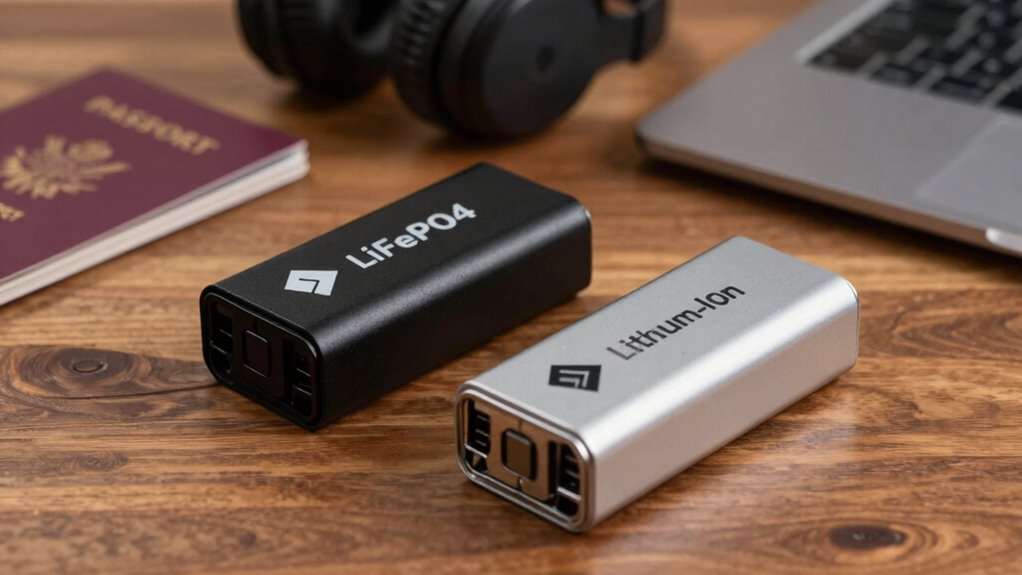
When choosing between LiFePO4 and lithium-ion batteries, understanding their key differences can help you make an informed decision. Both types are popular for portable power solutions, but they serve different needs, especially when it comes to travel. The battery lifespan is a major factor; LiFePO4 batteries typically last longer than lithium-ion options. They often endure 2,000 to 3,000 cycles, whereas lithium-ion batteries usually range between 500 to 1,000 cycles. This means that if you’re planning extended trips or need a reliable power source over time, LiFePO4 might be the smarter choice due to its durability. The extended lifespan ensures you won’t have to replace the battery as frequently, saving you money and hassle down the line.
Charging efficiency is another critical aspect to think about for travel. Lithium-ion batteries generally charge faster and more efficiently than LiFePO4. They can reach a full charge in a shorter period, which is advantageous when you’re on the go and need quick power boosts. This efficiency means less downtime between charges, making lithium-ion batteries more convenient for short trips or situations where fast recharge times matter. On the other hand, LiFePO4 batteries, while taking slightly longer to charge, are more stable and maintain their capacity better over many cycles. They tend to handle repeated charging and discharging more gracefully, which can be a significant advantage if you’re traveling in remote areas with limited access to charging points.
Another point to think about is safety. LiFePO4 batteries are inherently safer due to their chemical stability. They’re less prone to overheating, thermal runaway, or catching fire, making them a more secure option for portable use, especially in confined spaces like RVs or small cabins. Lithium-ion batteries, while generally safe when used properly, require more careful handling and robust protection circuits to prevent hazards. For travelers, safety and reliability are often top priorities, and LiFePO4’s stability gives it an edge.
Frequently Asked Questions
How Do Charging Times Compare Between Lifepo4 and Lithium-Ion Batteries?
You’ll find that LiFePO4 batteries typically have faster charging speeds and better recharge efficiency compared to lithium-ion batteries. This is because LiFePO4 chemistry allows for quicker charging cycles without compromising battery health. As a result, you can recharge your LiFePO4 battery more quickly and with less energy loss, making it ideal for travel where time and efficiency matter. Keep in mind, charging times may vary based on the charger and capacity.
What Are the Environmental Impacts of Each Battery Type?
Imagine batteries as tiny forests being harvested. Lithium-ion batteries often face recycling challenges, making waste harder to process, while their resource extraction impacts can cause environmental harm. LiFePO4 batteries are generally more eco-friendly, with fewer toxic materials and easier recycling. You’ll find that choosing LiFePO4 helps reduce environmental damage, as it minimizes resource extraction and simplifies disposal, making it a cleaner, greener option for your travel needs.
Are Lifepo4 Batteries Compatible With All Portable Devices?
LiFePO4 batteries are generally compatible with most portable devices, but you should verify your device’s battery compatibility first. They offer high device safety due to their stable chemistry, reducing risks of overheating and fires. While they work well for many gadgets, some devices may require specific power ratings or connectors. Always verify your device’s specifications and guarantee proper compatibility to keep your devices safe and functioning properly during travel.
How Do Temperature Ranges Affect Battery Performance During Travel?
Imagine you’re hiking in a cold mountain area, and your battery’s performance drops because of low temperatures. Temperature ranges markedly impact your battery’s thermal stability and operating temperature. If you stay within the recommended range, your device functions efficiently. Extreme cold can cause capacity loss, while heat may shorten battery life. Always check your battery’s specified temperature limits to guarantee reliable performance during travel.
What Safety Precautions Are Necessary for Each Battery Chemistry?
You should handle both battery types carefully to prevent fire hazards. Always follow proper safety precautions, like avoiding punctures and exposure to extreme heat. When disposing of batteries, make sure you follow local regulations for battery disposal to prevent environmental harm. Keep batteries away from flammable materials and never attempt to open or repair them yourself. These steps help prevent accidents and protect you during travel.
Conclusion
When choosing between LiFePO4 and lithium-ion batteries for travel, consider your priorities. LiFePO4 offers longer life spans and enhanced safety, making it ideal for extended trips. Did you know LiFePO4 batteries can last up to 3,000 cycles, compared to around 500-1,000 for lithium-ion? This statistic highlights their durability, giving you confidence on the road. Ultimately, pick the chemistry that best fits your travel style and power needs for a worry-free adventure.